

Diamond 4 C's Guide
Master the fundamentals of diamond quality with our comprehensive guide to Cut, Color, Clarity, and Carat
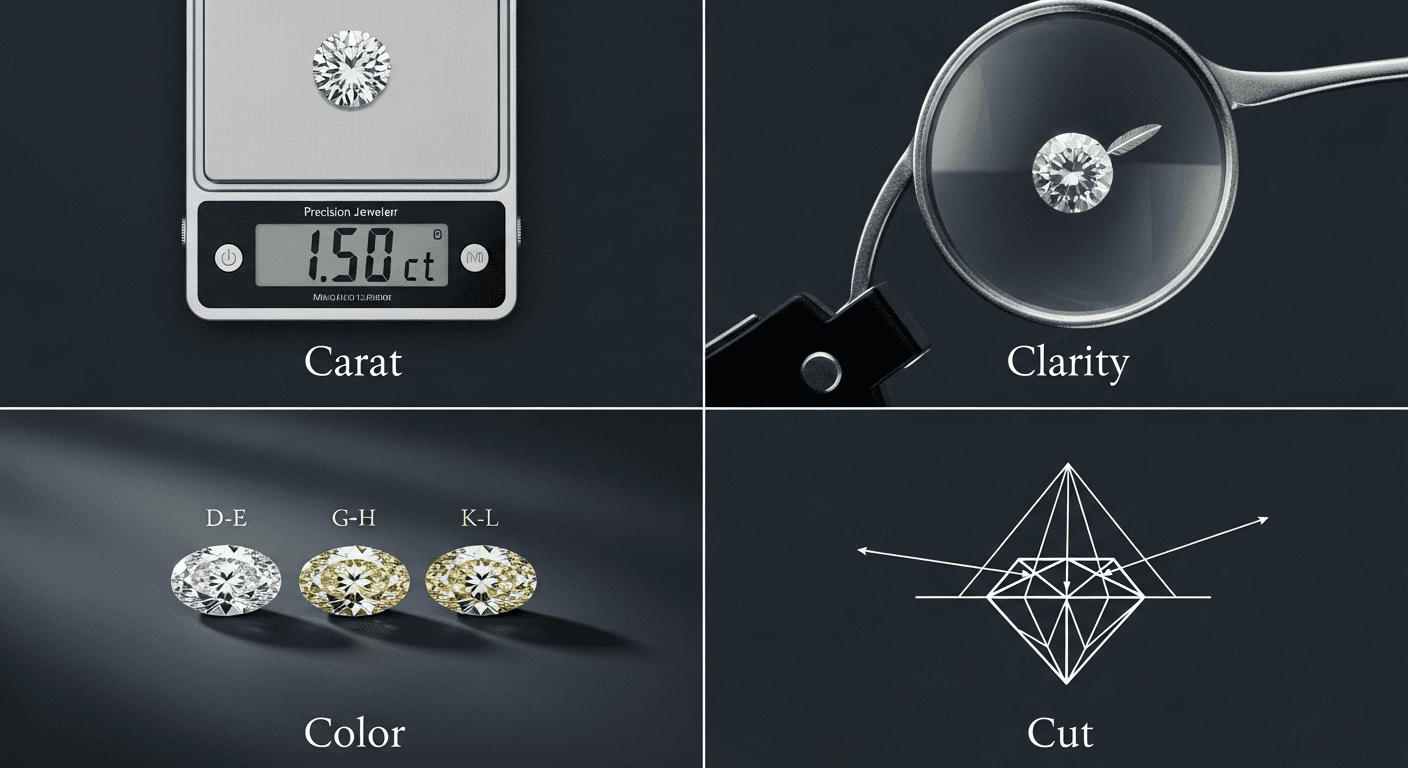
Understanding the 4 C's of diamonds is essential for making an informed purchase. These four characteristics—Cut, Color, Clarity, and Carat—determine a diamond's quality, beauty, and value. Each factor plays a crucial role in the diamond's overall appearance and price.
The Four Pillars of Diamond Quality
Cut
The cut determines how well a diamond reflects light, affecting its brilliance and sparkle. A well-cut diamond will exhibit maximum fire and scintillation.
Color
Diamond color is graded from D (colorless) to Z (light yellow). The less color a diamond has, the more valuable it typically becomes.
Clarity
Clarity refers to the absence of inclusions and blemishes. The fewer imperfections, the rarer and more valuable the diamond.
Carat
Carat measures a diamond's weight. One carat equals 200 milligrams. Larger diamonds are rarer and generally more valuable per carat.
Cut: The Heart of Brilliance
Cut is arguably the most important of the 4 C's because it has the greatest impact on a diamond's beauty. Even a diamond with perfect color and clarity can appear dull if poorly cut.
Cut Grades (GIA Scale)
Color: The Spectrum of Value
Diamond color is graded on a scale from D to Z, with D being completely colorless and Z having noticeable color. The absence of color allows more light to pass through, creating greater brilliance.
Color Grade Categories
Colorless (D-F)
Exceptional white, rare and premium
Near Colorless (G-J)
Excellent value with minimal color
Faint Color (K-M)
Slight warmth, budget-friendly
Clarity: Understanding Inclusions
Diamond clarity refers to the absence of inclusions (internal flaws) and blemishes (surface imperfections). Most diamonds contain some inclusions, which are like birthmarks that make each diamond unique.
GIA Clarity Scale
Carat: Size and Value
Carat weight measures how much a diamond weighs. One carat equals 200 milligrams or 0.2 grams. Larger diamonds are exponentially rarer, making them more valuable per carat.
Popular Carat Weights
0.50 - 0.75 ct
Elegant and affordable choice
1.00 ct
Classic choice, excellent presence
1.50 - 2.00 ct
Luxurious and impressive
3.00+ ct
Exceptional and rare
Expert Buying Tips
Prioritize Cut Quality
Always prioritize cut over the other C's. A well-cut diamond will appear more brilliant than a larger, poorly cut stone.
Sweet Spot for Value
Consider G-H color and VS1-VS2 clarity for the best balance of beauty and value.
Carat Weight Strategy
Consider weights just below major milestones (0.90 ct vs 1.00 ct) for significant savings.
Ready to Find Your Perfect Diamond?
Use our diamond search tool to find stones that meet your exact specifications across all 4 C's.