

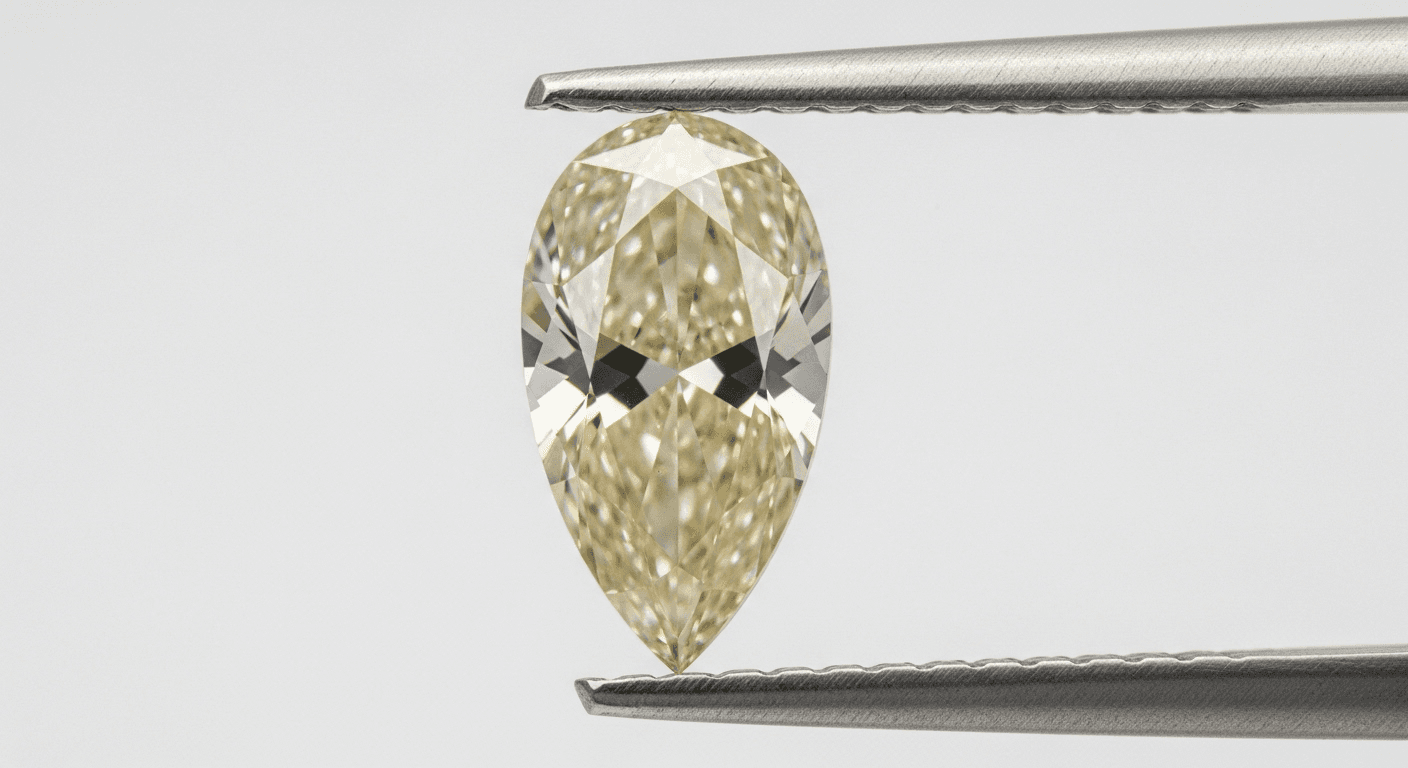
Diamond Color
Understanding diamond color grading from colorless to faint yellow and how it affects beauty and value
Diamond color refers to the natural tint inherent in white diamonds. The less color a diamond has, the higher its value. The GIA color scale ranges from D (completely colorless) to Z (noticeable color), with most engagement ring diamonds falling between D and J.
What Affects Diamond Color
Natural Formation
Trace elements and structural defects during diamond formation create subtle color differences.
- • Nitrogen atoms cause yellow tints
- • Boron creates blue coloration
- • Radiation exposure can cause green hues
- • Crystal lattice defects affect color
Visual Impact
Color differences are subtle and require trained eyes to distinguish between adjacent grades.
- • Viewed face-down against white background
- • Compared to master stones
- • Consistent lighting conditions required
- • Professional grading essential
The GIA Color Grading Scale
The Gemological Institute of America (GIA) developed the industry-standard color grading scale from D to Z. The scale starts at D to avoid confusion with existing A-C grading systems used for other gemstones.
Colorless (D-F)
D Grade
Absolutely colorless. The highest color grade and extremely rare. Premium pricing.
E Grade
Colorless. Minute traces of color detected only by expert gemologists. Rare and valuable.
F Grade
Colorless. Slight color detected only by expert gemologists. Excellent choice for investment.
Near Colorless (G-J)
G Grade
Near colorless. Color noticeable when compared to higher grades. Excellent value.
H Grade
Near colorless. Color noticeable when compared to higher grades. Popular choice.
I Grade
Near colorless. Slight color visible. Good value with warm appearance.
J Grade
Near colorless. Slight color visible. Budget-friendly with character.
Faint Color (K-M)
K Grade
Faint color visible to the naked eye. Warm, champagne-like appearance.
L Grade
Faint color easily visible. Distinct warm tone, budget-conscious choice.
M Grade
Faint color easily visible. Noticeable warmth, vintage appeal.
Very Light to Light (N-Z)
N-R Grades
Very light color. Noticeable yellow or brown tint. Typically not used in fine jewelry.
S-Z Grades
Light color. Obvious yellow or brown color. May have vintage or antique appeal.
How Diamond Shape Affects Color Appearance
Shapes That Hide Color
- Round Brilliant:Excellent light reflection masks body color effectively
- Princess:Brilliant cut faceting helps hide color
- Cushion:Brilliant faceting conceals slight color
Shapes That Show Color
- Emerald:Step cut and large table reveal body color easily
- Asscher:Similar to emerald, shows color in the center
- Radiant:Large size can emphasize body color
How Setting Metal Affects Color Perception
White Gold/Platinum
Cool-toned metals enhance the whiteness of colorless diamonds (D-G) and make slight color more noticeable in lower grades.
Best for: D-H color grades
Yellow Gold
Warm metal complements diamonds with slight color (I-M), making them appear whiter by contrast.
Best for: I-M color grades
Rose Gold
Pink-toned metal creates a romantic setting that can complement diamonds across the color spectrum.
Best for: G-K color grades
Color Grade Pricing Impact
Price Differences by Color Grade
Premium Grades (D-F)
- • D Grade: Highest premium, 15-25% more than G
- • E Grade: Significant premium, 10-20% more than G
- • F Grade: Moderate premium, 5-15% more than G
- • Investment quality stones
Value Grades (G-J)
- • G Grade: Excellent balance of quality and value
- • H Grade: Most popular choice, great value
- • I Grade: Good value with slight warmth
- • J Grade: Budget-friendly with character
Expert Color Buying Tips
Sweet Spot for Value
G-H color grades offer the best balance of value and beauty. They appear colorless in most settings while being significantly less expensive than D-F.
Consider Your Setting
Match your color grade to your setting metal. Yellow gold can make I-J diamonds appear whiter, while platinum enhances the beauty of colorless stones.
Shape Matters
Round and brilliant cuts hide color better than step cuts. You can go lower in color with round diamonds than with emerald or asscher cuts.
Size Considerations
Larger diamonds show color more easily. Consider staying in the G-H range for diamonds over 1 carat to maintain a white appearance.
Personal Preference
Some people prefer the warmth of I-J diamonds, while others want the icy look of D-F. Consider what appeals to you personally.
Fluorescence Factor
Blue fluorescence can make lower color diamonds (I-M) appear whiter in daylight, but may cause haziness in higher grades.
Find Your Perfect Color Grade
Browse our collection of certified diamonds and filter by color grade to find the perfect balance of beauty and value.