

Diamond Cut
Master diamond cut quality, brilliance, and how precise craftsmanship creates maximum fire and scintillation
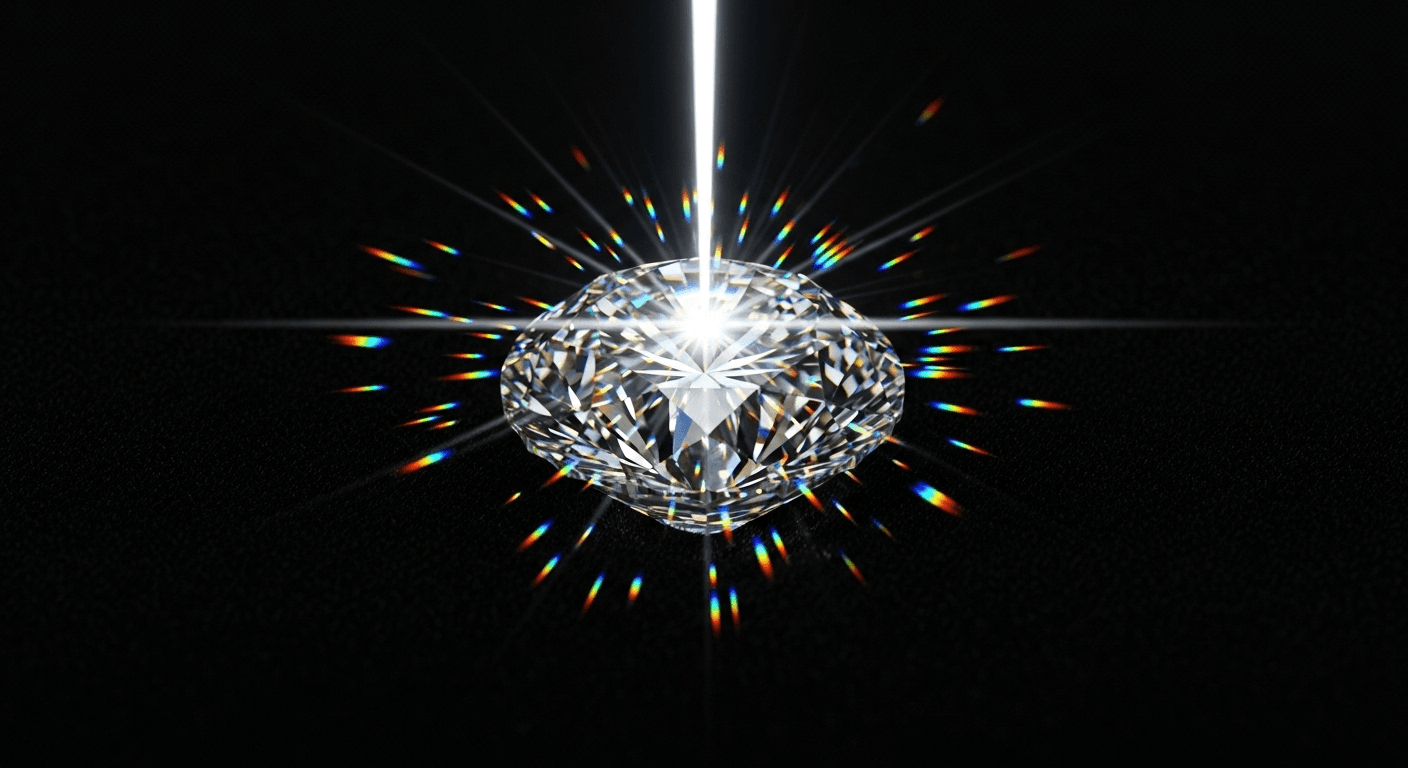
Cut is the most important factor in determining a diamond's beauty. While nature determines the other 3 C's, cut is the human contribution to a diamond's brilliance. A well-cut diamond reflects light internally from one mirror-like facet to another and disperses it through the top of the stone.
Why Cut is the Most Important C
Light Performance
Cut determines how well a diamond interacts with light, creating brilliance, fire, and scintillation.
- • Brilliance: White light return
- • Fire: Colored light dispersion
- • Scintillation: Sparkle and pattern
- • Polish: Surface smoothness
Visual Impact
A well-cut diamond can mask imperfections in other areas and appear larger than its actual carat weight.
- • Masks color and clarity issues
- • Maximizes apparent size
- • Creates exceptional beauty
- • Influences overall value
GIA Cut Grading Scale
The GIA cut grading system evaluates how well a diamond's facets interact with light. The scale applies to round brilliant diamonds and considers proportions, symmetry, and polish.
Excellent Cut
Light Performance
- • Maximum brilliance and fire
- • Superior light return
- • Exceptional scintillation
- • Optimal proportions
Characteristics
- • Premium pricing (10-15% more)
- • Investment quality
- • Ideal for special occasions
- • Maximum visual impact
Very Good Cut
Light Performance
- • High brilliance and fire
- • Excellent light return
- • Great scintillation
- • Well-proportioned
Characteristics
- • Excellent value proposition
- • 5-10% less than Excellent
- • Popular choice for engagement rings
- • Great balance of beauty and price
Good Cut
Light Performance
- • Good brilliance
- • Adequate light return
- • Moderate scintillation
- • Acceptable proportions
Characteristics
- • Budget-friendly option
- • 15-25% less than Excellent
- • Suitable for larger carat weights
- • Good for price-conscious buyers
Fair and Poor Cut
Light Performance
- • Limited brilliance
- • Poor light return
- • Minimal scintillation
- • Compromised proportions
Recommendation
Generally not recommended for engagement rings or fine jewelry. These cuts sacrifice beauty for weight retention and rarely offer good value.
Anatomy of a Well-Cut Diamond
Key Proportions
Table Percentage
The flat top facet, ideally 54-57% of the diamond's width
Crown Height
The upper portion, affects fire and brilliance
Pavilion Depth
The lower portion, critical for light return
Girdle Thickness
The rim, affects durability and appearance
Cut Quality Factors
Symmetry
How precisely the facets align and meet
Polish
The smoothness of the diamond's surface
Fluorescence
The diamond's reaction to UV light
Culet
The bottom tip, preferably none or small
Cut Quality vs. Diamond Shape
Cut quality refers to how well a diamond is cut within its shape, while shape refers to the diamond's outline. Each shape has different cut quality standards and light performance characteristics.
Round Brilliant
- • Only shape with GIA cut grades
- • Maximum light performance
- • 57-58 facets
- • Ideal proportions well-established
Fancy Shapes
- • No standardized cut grades
- • Evaluate by visual assessment
- • Varying facet arrangements
- • Shape-specific considerations
Step Cuts
- • Emerald and Asscher cuts
- • Emphasize clarity over brilliance
- • Hall-of-mirrors effect
- • Require higher clarity grades
Understanding Light Performance
Brilliance
The amount of white light returned to the eye. A well-cut diamond maximizes brilliance by reflecting light internally before it exits through the crown.
Fire
The separation of white light into rainbow colors. Optimal proportions create the right balance between brilliance and fire.
Scintillation
The sparkle and pattern of light and dark areas when the diamond moves. Creates the "sparkle" effect that makes diamonds captivating.
Expert Cut Buying Tips
Always Prioritize Cut
If you must compromise on one of the 4 C's, never compromise on cut. A well-cut diamond will outshine a larger, higher-color, higher-clarity stone with poor cut quality.
Excellent vs. Very Good
Very Good cut diamonds often provide excellent value. The difference between Very Good and Excellent is often imperceptible to the naked eye but significant in price.
Beyond the Grade
For fancy shapes, look at actual images and videos since there are no standardized cut grades. Focus on symmetry, proportions, and overall visual appeal.
Ideal Cut Considerations
Some vendors use "Ideal" cut terminology. While not an official GIA grade, these diamonds often fall within Excellent parameters with premium pricing.
Find Perfectly Cut Diamonds
Browse our collection of Excellent and Very Good cut diamonds to experience maximum brilliance and fire.