

Table of Contents
Gemstone Spotlight
Related Guides
The Ultimate Guide To Gemstones
Introduction to the World of Gemstones
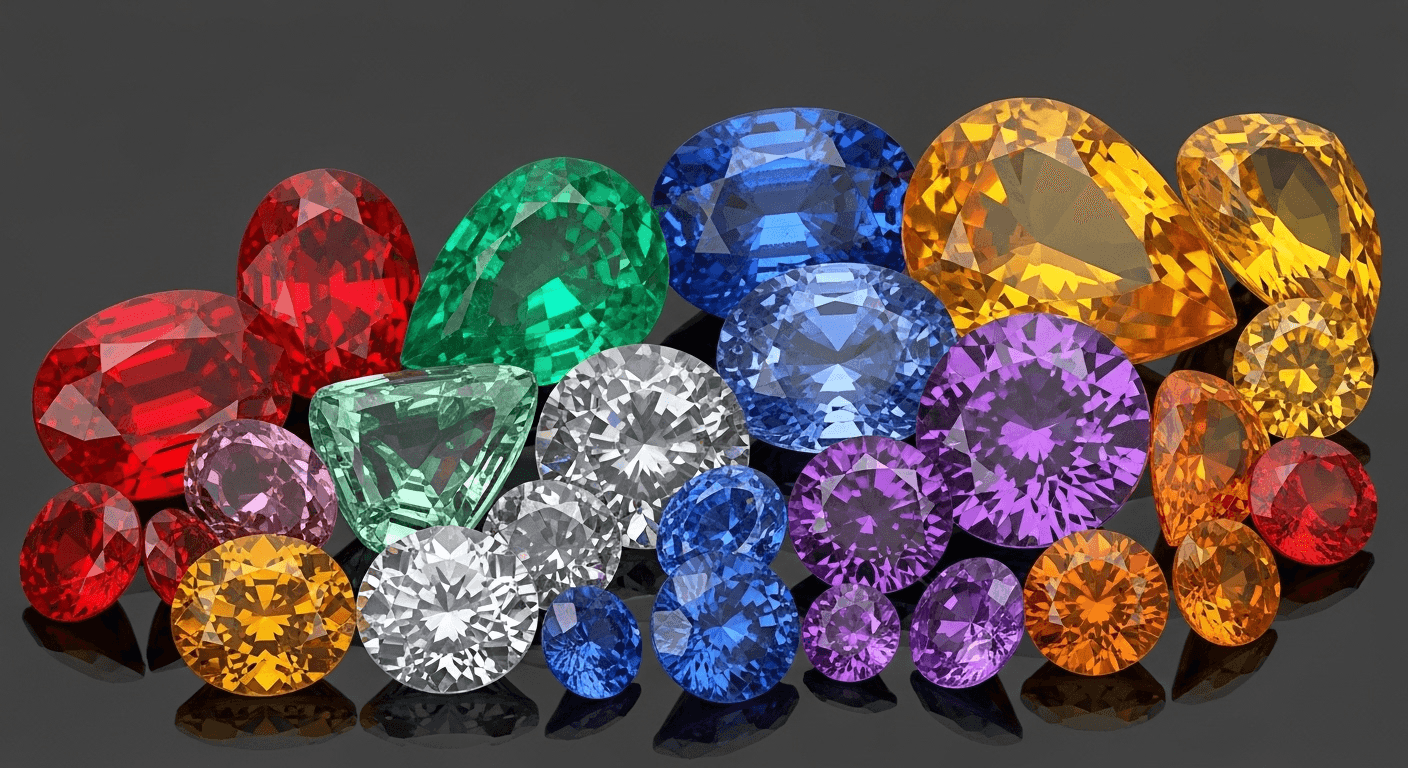
Gemstones have captivated humanity for millennia, serving as symbols of power, beauty, and spiritual significance across cultures and civilizations. These remarkable creations of nature represent some of Earth's most spectacular achievements, formed over millions of years under extraordinary conditions of heat, pressure, and chemical composition.
Today's gemstone market combines ancient appreciation with modern scientific understanding, creating opportunities for both emotional satisfaction and financial investment. This comprehensive guide will take you through everything you need to know about these precious treasures, from their geological origins to their place in contemporary jewelry and investment portfolios.
How Gemstones Form
Gemstone formation is one of nature's most remarkable processes, requiring specific conditions that occur rarely in Earth's crust. Understanding these processes helps appreciate why certain gemstones are so rare and valuable.
Igneous Formation
Formed from cooling magma or lava. Examples: Diamonds, some sapphires, and garnets.
Metamorphic Formation
Created by heat and pressure transforming existing rocks. Examples: Emeralds, rubies, many sapphires.
Sedimentary Formation
Formed in sedimentary environments. Examples: Turquoise, some opals, and freshwater pearls.
Gemstone Classification System
Gemstones are traditionally classified into two main categories: precious and semi-precious. This classification is based on rarity, hardness, and historical significance rather than beauty alone.
Classification Criteria
Precious Gemstones
- • Exceptional rarity
- • Superior hardness (7+ on Mohs scale)
- • Outstanding beauty
- • Historical significance
Semi-Precious Gemstones
- • More abundant availability
- • Variable hardness levels
- • Diverse beauty and colors
- • Accessible pricing
The Big Four: Precious Gemstones
Four gemstones have earned the designation "precious" through their combination of beauty, rarity, and durability. These stones represent the pinnacle of gemstone desirability and value.
| Gemstone | Hardness | Composition | Colors | Rarity |
|---|---|---|---|---|
| Diamond | 10 | Carbon | Colorless to yellow, brown, and fancy colors | Extremely Rare (fancy colors) |
| Ruby | 9 | Corundum (Al₂O₃) | Red (from pink-red to deep red) | Very Rare (pigeon blood red) |
| Sapphire | 9 | Corundum (Al₂O₃) | All colors except red | Rare (Kashmir, Padparadscha) |
| Emerald | 7.5-8 | Beryl (Be₃Al₂Si₆O₁₈) | Green (from light to deep green) | Very Rare (Colombian) |
Popular Semi-Precious Stones
Semi-precious gemstones offer incredible diversity in color, pattern, and price point. Many rival precious stones in beauty while remaining more accessible to collectors and jewelry enthusiasts.
Amethyst
Purple variety of quartz, February birthstone
Aquamarine
Blue beryl, March birthstone
Citrine
Yellow quartz, November birthstone
Garnet
Deep red silicate, January birthstone
Peridot
Olive green olivine, August birthstone
Turquoise
Blue-green copper mineral
Evaluating Gemstone Quality
Understanding quality factors helps you make informed decisions whether buying for pleasure or investment. While the "4 Cs" apply to all gemstones, each type has specific considerations.
Color
The most important factor for most gemstones. Evaluate hue (the color itself), saturation (intensity), and tone (lightness/darkness).
Clarity
The absence of inclusions and blemishes. Some gemstones like emeralds are expected to have inclusions, while others like diamonds prize clarity.
Cut
How well the gemstone is proportioned and faceted. Good cut maximizes beauty and light performance while maintaining structural integrity.
Carat Weight
Size matters, but quality should take precedence. Some gemstones are rarer in larger sizes, making carat weight more significant.
Understanding Gemstone Treatments
Most gemstones undergo some form of treatment to enhance their appearance. Understanding these treatments helps you make informed purchases and properly care for your gemstones.
Common Treatments
Gemstones as Investment
High-quality gemstones can serve as alternative investments, offering portfolio diversification and potential appreciation. However, they require knowledge, patience, and careful selection.
Investment Considerations
Advantages
- • Portable wealth storage
- • Inflation hedge potential
- • Emotional enjoyment
- • No ongoing maintenance costs
Considerations
- • Requires expertise
- • Illiquid market
- • Authentication challenges
- • Insurance and storage needs
Start Your Gemstone Journey
Ready to explore our curated collection of certified gemstones? Each stone is hand-selected for exceptional quality and comes with complete documentation.